


Nine days and 13,300 work hours later, Amtrak’s package of infrastructure improvements in the First Street Tunnel just south of Washington Union Station wrapped up last Monday, on time, on budget, and with enough days to spare to keep disruptions out of the busy holiday period.
They called it the “Pause for Progress,” and yes it was an actual pause. A lot of trains had to be rerouted, and there were passengers who somehow didn’t get the word and were inconvenienced. I have a lot of sympathy for that kind of disruption, and so did a lot of the leaders at the various agencies involved.
But anyone who has followed my commentaries here over the years knows that I’m a big fan of ripping off the band-aid and getting big projects done quickly. It’s the best alternative to waiting decades to do what other countries do in months.
And it was long overdue. I commuted on the Virginia Railway Express for more than a decade into DC Union. And of course I ride Amtrak’s NEC trains routinely. Rumbling over the A-interlocking at the speed of smell, you could be forgiven for concluding that this section was first installed during the reign of Ramses II.
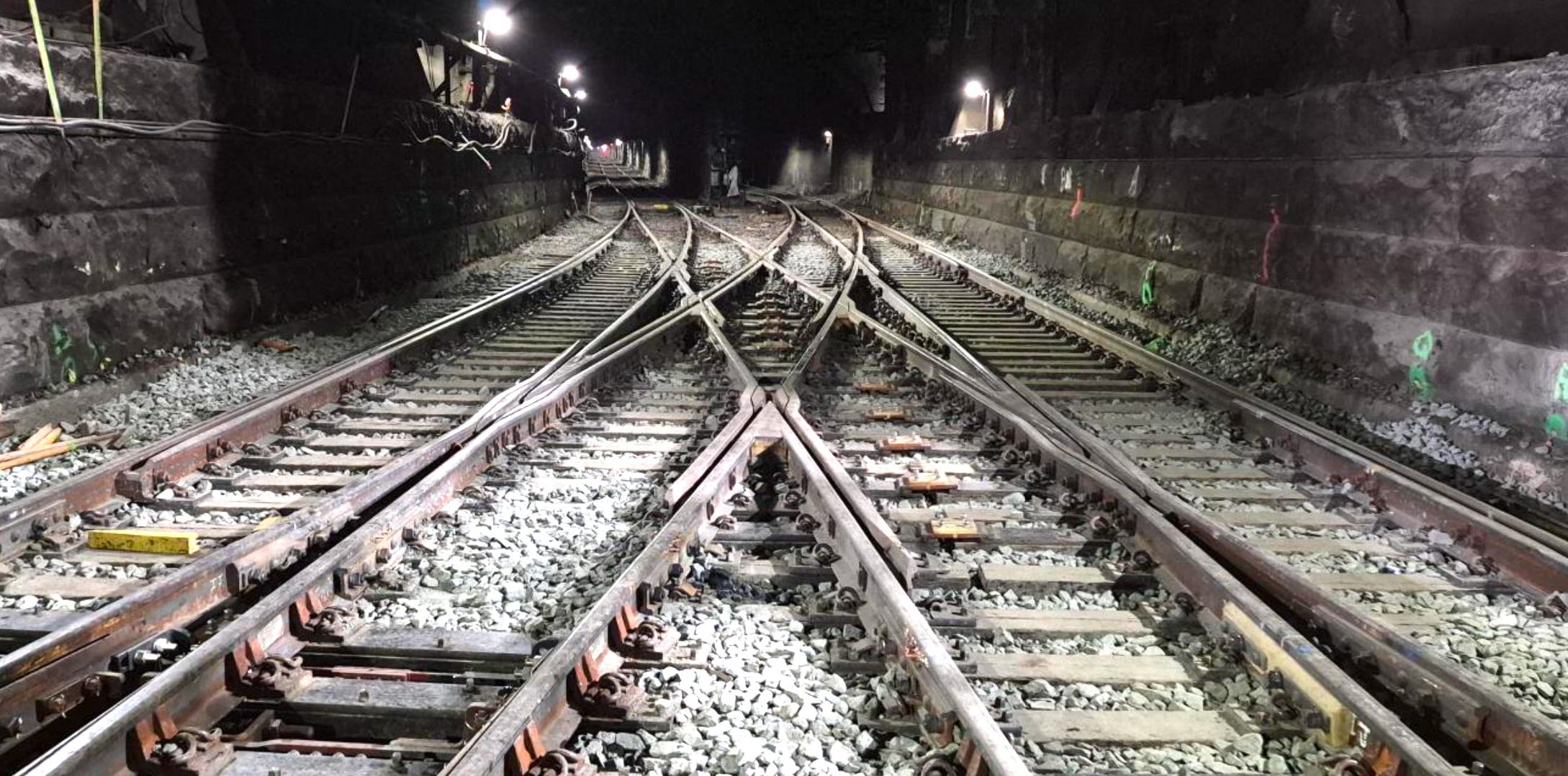
But thanks to reliable funding, smart project planning, and multi-state, multi-agency, and multi-stakeholder cooperation spanning Washington Metro, CSX, Norfolk Southern, the North Carolina Dept. of Transportation, Virginia Railway Express, and the Virginia Passenger Rail Authority, crews were able to do a truly impressive amount of work in a very short amount of time.
Even better, they did it without budget overruns or big delays. A competent project, executed without drama.
“This concentrated construction period allowed our teams to make significant improvements to critical infrastructure while limiting the amount of time it was out of service,” Jennifer Mitchell, Amtrak’s Executive Vice President for Strategy and Planning, said in a prepared statement.
Indeed. Congratulations to the Amtrak team for yet another in a string of capital projects that have gone off smoothly and without giant cost overruns. Given the scope of the work it would have been understandable if things had been delayed. Crews installed eight new electric switch machines, two double-slip switches, and replaced the crossing diamond, rehabilitated 350 feet of track and tunnel base, installed 550 tons of ballast, outright replaced 1,000 feet of rail and 215 ties, and installed 2,500 feet of signal/electrical cable.
There were people who wanted this work done on nights and weekends instead of just taking a nine-day disruption and moving forward. But I’ll always take nine days of reroutes and schedule changes to get a smooth, drama-free, on-budget project done. It minimizes disruption, generally results in better-quality work with fewer defects, and winds up saving money because infrastructure I build tomorrow is always going to be more expensive than infrastructure I build today.
Next up, Portal Bridge…!
Good news for sure.👍