


The Surface Transportation Board’s review of the proposed Union Pacific–Norfolk Southern merger took a significant turn this week. The Board ordered Union Pacific to make public a video of remarks by UP Chief Executive Jim Vena -- which it did -- and opened a formal inquiry into whether UP has threatened or discouraged stakeholders from speaking freely about the transaction.
The controversy began with Vena’s March appearance before roughly 900 people at a Southwest Association of Rail Shippers conference.
“Come and see us, talk to us about what you need to move ahead with us and how we put this thing forward,” Vena tells the shippers as he closes his remarks. “If we don’t do that, Union Pacific will still be there. And if I stick around, which I probably will, I’ll probably increase everybody’s rates that said they didn’t want a seamless railroad by three or four extra percent to teach you a lesson. Thank you very much.”
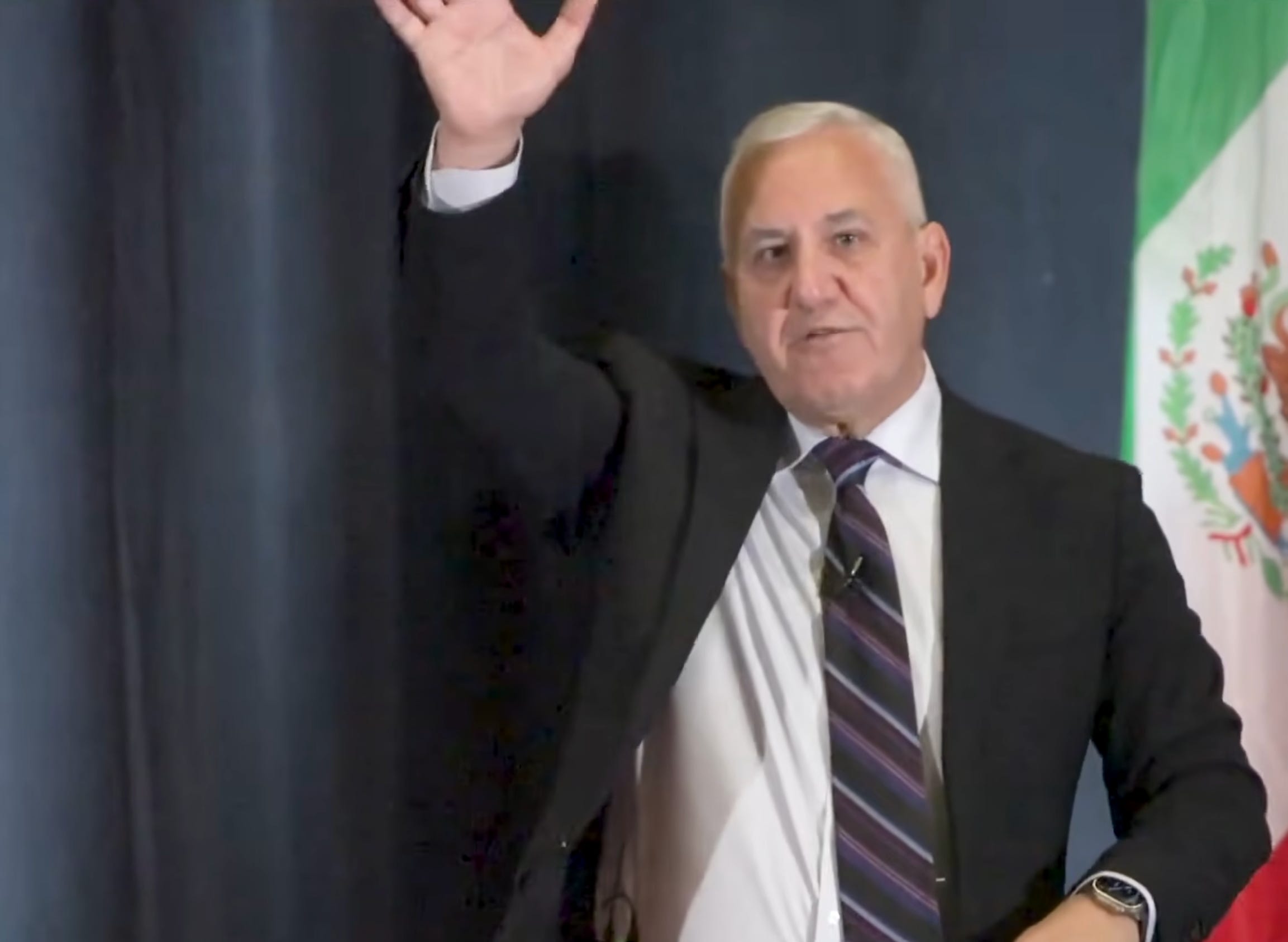
UP CEO Jim Vena closing his remarks to the Southwest Association of Rail Shippers in March (video screengrab)
Union Pacific says Vena’s remark was an offhand joke. UP issued a statement today declaring publicly that it does not retaliate against customers and that a customer’s position on the merger will not affect its rates or service.
So far the Board hasn’t concluded that retaliation occurred. But in a letter to the STB and posted in the proceeding’s docket, the CPKC railroad raised not just Vena’s remarks but also allegations about other conduct to the STB, prompting the Board to look hard at those accusations. In Decision No. 45, the Board said it has “serious concerns” that Vena’s remarks may have affected whether stakeholders feel free to participate without fear of commercial repercussions. It ordered UP to produce communications and verified statements concerning possible consequences -- including changes in rates, service, infrastructure investment or contract terms -- linked to anyone’s support for, opposition to or silence about the merger.
In that same decision, the Board also invited stakeholders and trade associations to report perceived, threatened or actual retaliation, including through confidential filings. It said any resulting evidence could affect whether the proceeding continues, how much weight the Board gives statements supporting the merger and, ultimately, whether the transaction is consistent with the public interest.
So, even though this particular controversy began with freight customers there’s real implications here for passengers, too. Obviously, passenger operators -- Amtrak and commuter agencies, too -- are deeply dependent upon their host railroads. UP and NS control daily dispatching, track access, capacity decisions, operating agreements and negotiations over future passenger service. If public agencies think challenging a host railroad could jeopardize that working relationship, the Board may never get a complete picture of how a transaction would affect passenger trains.
These new developments this week don’t really change the passengers’ case Rail Passengers Association is already making. Our September filing to the STB showed that UP and NS failed to provide the detailed operational analysis needed to determine how their projected freight growth would affect existing passenger trains. Their statistical analysis fails to establish that already-poor passenger performance will be protected, and their filings largely disregard the many new and expanded passenger routes now moving through the federal Corridor Identification Program.
We are preparing a new filing opposing the merger on its merits. And while our core positions remain, these latest events reinforce a particular element of our argument: passenger protections can’t just rest solely on voluntary promises, or require an affected passenger agency to launch a public fight against the railroad controlling its trains. If the merger is approved, any passenger conditions will need independent monitoring, automatic reporting, confidential ways to report problems, clear performance triggers and rapid enforcement by the Board.
What good is a promise if the people it’s supposed to protect can’t invoke it without fear?