


Today, the Rail Passengers Association filed formal comments with the Federal Railroad Administration recommending a full Environmental Impact Statement (EIS) for Amtrak’s proposed Midwest Maintenance Facility at Canal Street Yard in Chicago.
That recommendation might surprise some people. After all, we’ve spent years arguing that America needs to build passenger-rail infrastructure faster, cut unnecessary bureaucratic delays, and make greater use of streamlined environmental reviews. We’ve enthusiastically supported Amtrak’s investments in modern maintenance facilities in New York, Boston, Philadelphia, Seattle, and elsewhere. Why, then, are we asking FRA to take a closer look at Chicago?
The answer is straightforward: We strongly support the investment, but the Environmental Assessment has not yet made a convincing case for the proposed location.
Chicago is the beating heart of America’s national passenger-rail network. Its maintenance facilities are aging, and the arrival of new equipment, including Amtrak’s Airo trainsets, demands a fundamentally different approach to inspecting, servicing, and maintaining trains. Better facilities can mean faster turnarounds, improved working conditions, greater equipment reliability, and ultimately better service for passengers. We’ve beaten the drum for that kind of investment for years, and we want that investment to happen.
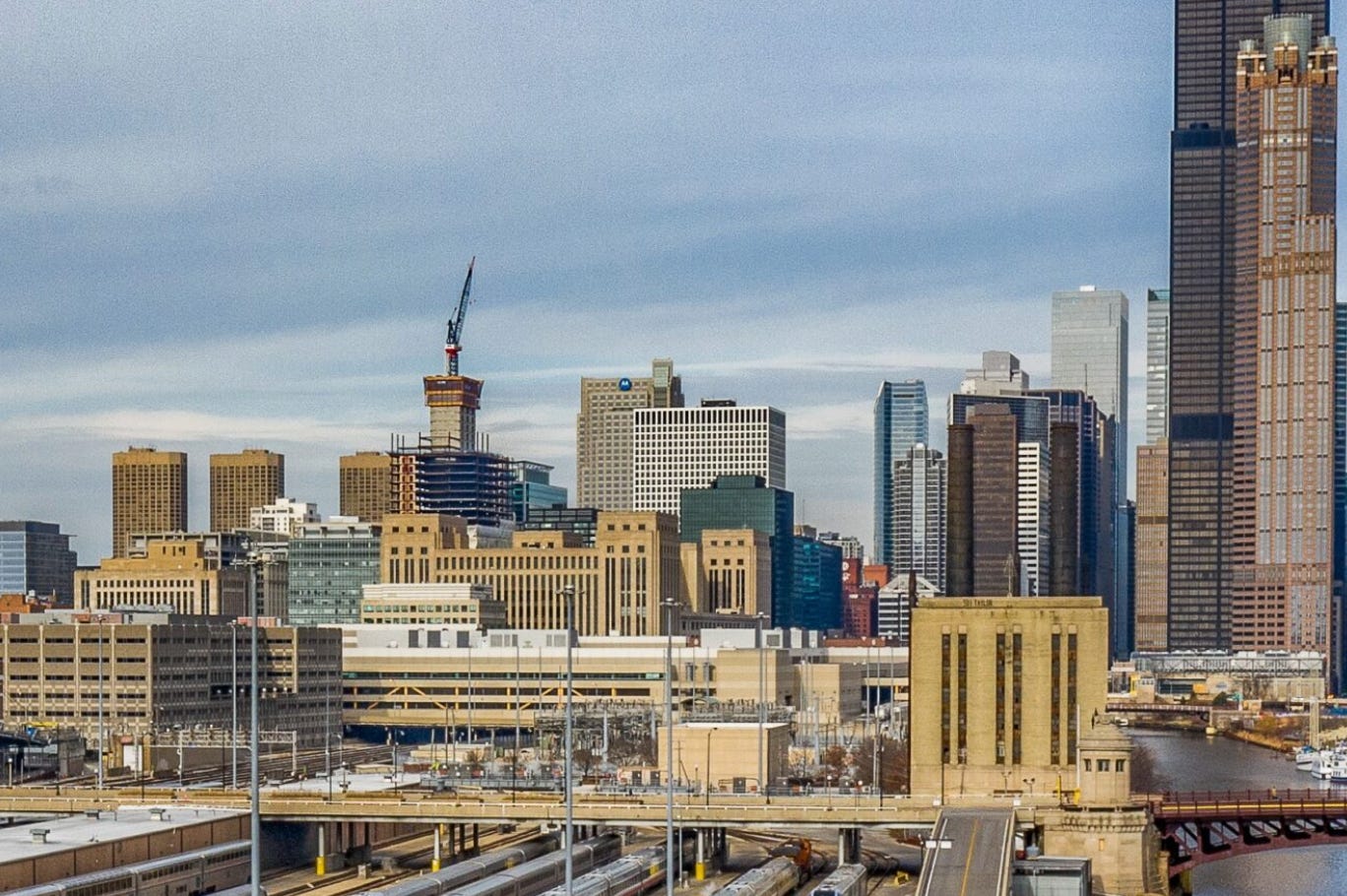
Amtrak Chicago (Amtrak photo)
But the proposed Canal Street project involves more than replacing outdated buildings and equipment. It would relocate maintenance activities away from the existing 14th Street Yard, introduce additional nonrevenue train movements across shared railroad infrastructure, and require rehabilitation of 17 aging railroad viaducts. Some of those structures would require substantial construction work affecting the streets and neighborhoods beneath them.
Our review identified three particularly important questions that remain unanswered.
First, why can’t Amtrak modernize 14th Street, perhaps in phases? It’s doing precisely that kind of construction at other major maintenance yards while continuing railroad operations. The circumstances in Chicago may be different, but FRA hasn’t adequately explained why those approaches were rejected. Are the BNSF and Metra properties at 14th Street potentially part of this conversation as well? Has that been explored? Perhaps it has and has been rejected...but if so, that happened privately and not in a way that we can see the discussion in the FRA’s docket.
Second, what would relocating the facility mean for train operations? FRA’s assessment relies on a computer simulation that reportedly concludes the additional movements won’t undermine on-time performance. But the underlying technical memorandum also isn’t available in the public docket. We believe that analysis deserves scrutiny, particularly when it concerns the reliability of trains serving passengers across the entire national network. I am hardly an operations expert; instead, I’m relying on operations experts with decades of railroad operating experience, and several of them have told me Canal Yards would introduce serious problems.
Maybe they’re right, and maybe they’re wrong, but in the absence of a thorough public discussion in the docket we as an Association have no way of assessing the question.
And third, what are the actual consequences of rehabilitating those 17 viaducts? The supporting studies contemplate full street closures lasting many weeks or months at individual crossings. Those impacts require careful construction planning, meaningful mitigation, and informed participation from the people and agencies responsible for keeping the surrounding neighborhoods functioning.
None of us knows enough at this stage to declare definitively that Canal Street unworkable. But as we put it in our formal comments, “Operational feasibility of Canal Street, standing alone, is not proof of its relative operational superiority.” A facility that can function isn’t necessarily the configuration that best serves passengers over the long term. And there’s no way to know without enough information about alternatives.
We also recognize that additional review comes at a real cost. Amtrak needs modern maintenance capacity in Chicago, and delaying that investment can have real consequences for employees, equipment availability, and passengers. We really take those consequences seriously. But there are costs associated with getting a major infrastructure decision wrong, too — particularly if an operating configuration introduces delays or constraints that the railroad must live with for decades. The challenge is to address Amtrak’s urgent maintenance needs while making sure the long-term solution actually improves the railroad. Those objectives shouldn’t be treated as mutually exclusive.
We’re also not arguing that every railroad improvement needs an EIS. Quite the opposite. Routine modernization in existing railroad facilities is exactly the kind of investment that should benefit from efficient permitting, including categorical exclusions where appropriate. The law and the implementing regulations say as much. But this project presents a different combination of operational changes, construction effects, and unresolved questions, and it’s fair to ask whether this kind of extensive change really fits the streamlined criteria for an Environmental Assessment.
Environmental regulations and their implementing regulations give FRA discretion in determining the appropriate scope of its environmental review. Here, we’re asking it to exercise that discretion by undertaking a full EIS. If the FRA ultimately determines that an EIS isn’t warranted, it should at least supplement the present Environmental Assessment, disclose the critical supporting analysis, and provide another opportunity for public comment.
We’ve said it before, and it bears repeating: Speed and haste are not synonyms. We support speed when feasible, and scrutiny where necessary.
No matter what supporters may say, our objective isn’t to delay an urgently needed investment. It’s to make sure Amtrak gets the right maintenance capacity, in the right operating configuration, for the decades ahead.
Our full comments, including our detailed technical findings and recommendations, are available in FRA Docket FRA-2026-2938.